-
Glas in Stahltanks geschmolzen (596)
-
Edelstahlbehälter (434)
-
Fusion verpfändete Epoxidbehälter (592)
-
Verzinkte Stahlbehälter (321)
-
Aluminiumhauben-Dächer (1316)
-
Abwasserbehälter (231)
-
Schweißbehälter aus Stahl (457)
-
Druckbehälter (295)
-
Anaerober Digestor (201)
-
Industrieabwasser Tanks (349)
-
Glasverkleidete Stahltanks (180)
-
Weggelaufene Stahltanks (390)
-
Schlammspeicher (115)
-
Biogasspeicher (173)
-
Leachatspeicher (133)
-
Landwirtschaftliche Wasserspeicher (179)
-
Feuerwasserbehälter (166)
-
Kornspeicher-Silos (146)
-
Biogasprojekte (425)
-
Abwasserbehandlungs-Projekte (788)
-
Doppelmembranes Dach (223)

|
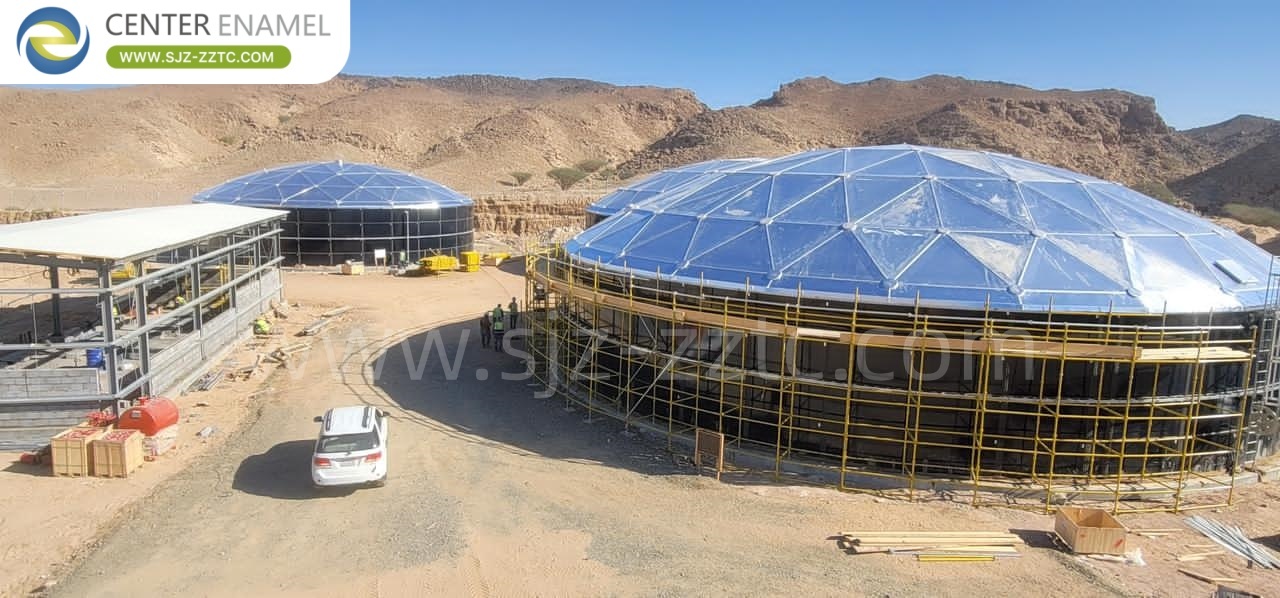
Geflügelabfälle umwandeln: Fortschrittliche Biogaslösungen und belastbare GFS-Tanks in Indonesien
| Herkunftsort: | China |
| Markenname: | CEC TANKS |
| Zertifizierung: | ISO 9001:2008, AWWA D103 , OSHA , BSCI |
| Modellnummer: | W |
| Min Bestellmenge: | 1 SATZ |
| Preis: | $5000~$20000 one set |
| Verpackung Informationen: | PE-Polyschaum zwischen jeweils zwei Stahlplatten; Holzpalette und Holz |
| Lieferzeit: | 10–30 Tage nach Erhalt der Anzahlung |
| Zahlungsbedingungen: | L/C, T/T |
| Versorgungsmaterial-Fähigkeit: | 60 Sätze pro Monat |
|
Ausführliche Information |
|||
| Herkunftsort | China | Markenname | CEC TANKS |
|---|---|---|---|
| Zertifizierung | ISO 9001:2008, AWWA D103 , OSHA , BSCI | Modellnummer | W |
| Farbe des Tankkörpers: | Dunkelgrün / kann individuell angepasst werden | Korrosionsintegrität: | Exzellent |
| Dicke der Stahlplatten: | 3 mm bis 12 mm, abhängig von der Tankstruktur | Chemische Beständigkeit: | Exzellent |
| Größe des Panels: | 2,4 Mio. * 1,2 Mio | Leicht zu reinigen: | Glatt, glänzend, inert, antiadhäsiv |
| Hervorheben: | Biogaslösungen für Geflügelabfälle,Abwasserbehandlung für GFS-Tanks,Biogas-Abwasserbehandlung Indonesien |
||
Beschreibung des Produkts
Geflügelabfälle umwandeln: Fortschrittliche Biogaslösungen und belastbare GFS-Tanks in Indonesien
Während Indonesien seine Position als einer der größten Geflügelproduzenten in Südostasien weiter festigt, befindet sich die Branche in einem entscheidenden Übergang zu einer nachhaltigen Intensivierung. Angesichts der großen Anzahl landwirtschaftlicher Betriebe, die über den gesamten Archipel verteilt sind, hat sich die Bewirtschaftung organischer Abfälle von einer betrieblichen Herausforderung zu einer strategischen Chance für die Energierückgewinnung gewandelt. Für moderne Geflügelbetriebe in Indonesien ist die Einführung von AdvancedBiogastechnologieist wesentlich. Durch die Kombination der hohen EffizienzCSTR (Completely Stird Tank Reactor)Prozess mit langlebigGlas-Fused-to-Steel-Tanks (GFS).wandeln landwirtschaftliche Betriebe erfolgreich gefährlichen Hühnermist in eine wertvolle Quelle erneuerbarer Energie um.
Die Landschaft des indonesischen Geflügelsektors und die Abfallherausforderungen
Die indonesische Geflügelindustrie zeichnet sich durch einen deutlichen Wandel hin zu groß angelegten, kommerzialisierten Tierfütterungsbetrieben (CAFOs) aus, um den steigenden Bedarf der großen Bevölkerung zu decken. Während dieses Wachstum die nationale Ernährungssicherheit unterstützt, erzeugt es eine immense Menge an „hochfesten“ organischen Abfällen, die eine professionelle Handhabung erfordern.
Hühnermistist aufgrund seines hohen Stickstoff-, Phosphor- und Ammoniakgehalts bekanntermaßen schwer zu behandeln. Im tropischen und oft feuchten Klima Indonesiens führt unsachgemäße Abfallbewirtschaftung zu Folgendem:
Grundwasserverschmutzung: Auswaschung von Nitraten und Krankheitserregern in lokale Wasserquellen, die von Gemeinden genutzt werden.
Luftverschmutzung: Massive Emissionen von Methan und Ammoniak, die zu starker Geruchsbelästigung führen und den CO2-Fußabdruck der Branche erhöhen.
Ungleichgewicht des Ökosystems: Nährstoffreicher Abfluss in lokale Flusssysteme und Küstengewässer, was zu Eutrophierung und Schädigung des Wasserlebens führt.
Um diese Risiken zu mindern, ist dieIndonesische Regierunghat seine gestärktAbwasserbehandlungsrichtlinienund Umweltstandards. Die Vorschriften schreiben nun vor, dass landwirtschaftliche Betriebe wirksame Aufbereitungssysteme einführen müssen, um Verschmutzungen vorzubeugen. Diese Richtlinien stehen im Einklang mit Indonesiens Engagement für erneuerbare Energien und ermutigen landwirtschaftliche Betriebe, Biogassysteme einzuführen, die zum nationalen Energiemix beitragen.
Vom Abfall zur Energie: Wie aus Hühnermist Biogas entsteht
Die Umwandlung von Hühnermist in Biogas ist ein ausgeklügelter biologischer Ablauf, der den Wert landwirtschaftlicher Nebenprodukte maximiert:
Abfallkonditionierung: Rohmist und Waschwasser werden gesammelt und weitergeleitetFest-Flüssigkeits-Trennerzum Entfernen von Federn und grobem Sand.
Anaerobe Verdauung: Die vorbereitete Aufschlämmung wird in einen gepumptAnaerober Reaktor(der Fermenter). In dieser sauerstofffreien Umgebung bauen spezialisierte Mikroorganismen organische Stoffe ab.
Methanabscheidung: Der biologische Abbau löst ausBiogas(Methan und $CO_2$), das in einem Doppelmembranhalter aufgefangen wird.
Energierückgewinnung: Das Gas wird über a gereinigtEntschwefelungssystemum $H_2S$ zu entfernen und dann in a einzuspeisenKWK (Kraft-Wärme-Kopplung)Motor zur Stromerzeugung für landwirtschaftliche Betriebe, Kühlsysteme und Beleuchtung.
Feinmechanik: Spezialisierte anaerobe Prozesse
Center Email bietet eine vielfältige Palette anaerober Technologien, die auf spezifische Abwasserprofile zugeschnitten sind:
CSTR (Completely Stird Tank Reactor): Dies ist die erste Wahl für Hühnermist, der typischerweise eine hohe Feststoffkonzentration aufweist. Mechanische Rührwerke sorgen für eine homogene Mischung, verhindern die Bildung von Oberflächenkrusten und sorgen für eine stabile Gasproduktion.
UASB (Upflow Anaerobic Sludge Blanket): Ideal für flüssiges Abwasser mit hohem Volumen, mit einer körnigen Schlammdecke für schnellen organischen Abbau auf kleinem Raum.
USR (Upflow Solids Reactor): Entwickelt für Abfälle mit hohem Schwebstoffgehalt und ermöglicht längere Verweilzeiten, um komplexe organische Fasern gründlich aufzuschließen.
IC-Reaktor (Internal Circulation).: Ein Hochgeschwindigkeitssystem mit interner Gaslift-Zirkulation, perfekt für große Industrieprojekte mit extrem hohen CSB-Werten.
Der GFS-Tank-Vorteil: Der Standard für die Biogas-Infrastruktur
Für diese biologischen Prozesse ist die Wahl des Reaktorbehälters entscheidend.Glas-Fused-to-Steel-Tanks (GFS).sind aus mehreren Gründen zum Branchenmaßstab geworden:
Außergewöhnliche Korrosionsbeständigkeit: Die Glasauskleidung ist chemisch inert und schützt den Stahl vor den aggressiven organischen Säuren und Schwefelwasserstoff ($H_2S$), die bei der Verdauung entstehen.
Modulare und schnelle Installation: GFS-Tanks werden vor Ort zusammengeschraubt, was im Vergleich zur herkömmlichen Betonkonstruktion einen schnellen Einsatz in abgelegenen indonesischen Provinzen ermöglicht.
Wärmekontrolle: Die Tanks können leicht isoliert werden, um die stabilen mesophilen oder thermophilen Temperaturen aufrechtzuerhalten, die für eine optimale Bakterienaktivität in tropischen Klimazonen erforderlich sind.
Jahrzehntelanger Dienst: Mit einer Lebensdauer von über 30 Jahren und minimalem Wartungsaufwand bieten sie eine hervorragende Kapitalrendite.
Mittelemail: Ihr Partner für Biogas-Exzellenz
Center Email ist ein weltweit führender Anbieterschlüsselfertige EPC-Lösungen (Engineering, Beschaffung und Bau).für Biogasprojekte. Unser Vorteil liegt in unserem umfassenden Servicemodell – vom ersten Prozessdesign und der Herstellung maßgeschneiderter Geräte bis hin zur Installation vor Ort und dem langfristigen Support. Mit Projekten in über 100 Ländern verstehen wir die Komplexität verschiedener Abfallströme und bieten das erforderliche technische Fachwissen, um unseren Kunden 100 % Umweltkonformität und maximale Energierückgewinnung zu gewährleisten.
Globale Erfolgsgeschichten: Bewährte Projektfälle
Fall 1: Schweden-Biogasprojekt
Tankabmessungen: φ19,11 × 19,2 m (H) – 1 Einheit
Gesamtvolumen: 5.510 m³
Fertigstellungsjahr: 2024
Fall 2: Biogasprojekt in Indonesien
Anwendung: Anaerobe Reaktoren für Palmöl-Kläranlagen
Tankmodelle: Ø17,58 × 8,4 m; Ø16,82 × 7,2 m
Anzahl der Panzer: 3 GFS-Panzer
Installationsdatum: 2013
Für Geflügelfarmbetreiber in Indonesien ist die Integration vonBiogastechnologiemit derCSTR-ProzessUndGFS-Panzerist der effektivste Weg, um Wirtschaftswachstum und Umweltverpflichtung in Einklang zu bringen. Durch die Umwandlung von Abfallverpflichtungen in erneuerbaren Strom stellt Centre Email die notwendige Infrastruktur bereit, um die Branche in eine grüne, autarke Zukunft zu führen. Dieser integrierte Ansatz gewährleistet die langfristige Einhaltung der indonesischen Umweltgesetze und senkt gleichzeitig die betrieblichen Energiekosten durch nachhaltige Ressourcenrückgewinnung erheblich.