-
Glas in Stahltanks geschmolzen (596)
-
Edelstahlbehälter (434)
-
Fusion verpfändete Epoxidbehälter (592)
-
Verzinkte Stahlbehälter (321)
-
Aluminiumhauben-Dächer (1316)
-
Abwasserbehälter (231)
-
Schweißbehälter aus Stahl (457)
-
Druckbehälter (295)
-
Anaerober Digestor (201)
-
Industrieabwasser Tanks (349)
-
Glasverkleidete Stahltanks (180)
-
Weggelaufene Stahltanks (390)
-
Schlammspeicher (115)
-
Biogasspeicher (173)
-
Leachatspeicher (133)
-
Landwirtschaftliche Wasserspeicher (179)
-
Feuerwasserbehälter (166)
-
Kornspeicher-Silos (146)
-
Biogasprojekte (425)
-
Abwasserbehandlungs-Projekte (788)
-
Doppelmembranes Dach (223)

|
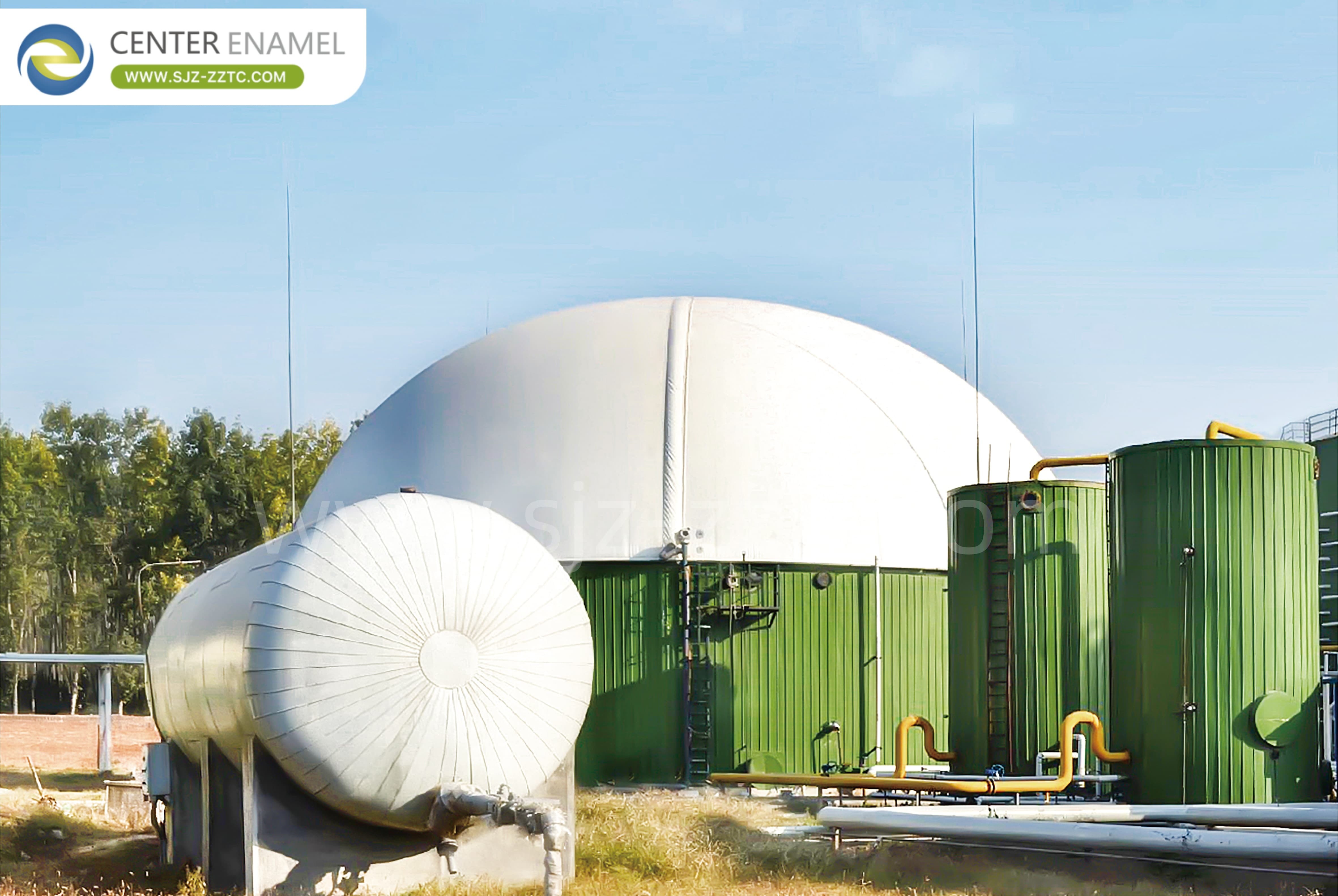
Premium-Biogastechnologie und GFS-Tanks für das thailändische Hausmüll-Biogasprojekt
| Herkunftsort: | China |
| Markenname: | CEC TANKS |
| Zertifizierung: | ISO 9001:2008, AWWA D103 , OSHA , BSCI |
| Modellnummer: | W |
| Min Bestellmenge: | 1 SATZ |
| Preis: | $5000~$20000 one set |
| Verpackung Informationen: | PE-Polyschaum zwischen jeweils zwei Stahlplatten; Holzpalette und Holz |
| Lieferzeit: | 10–30 Tage nach Erhalt der Anzahlung |
| Zahlungsbedingungen: | L/C, T/T |
| Versorgungsmaterial-Fähigkeit: | 60 Sätze pro Monat |
|
Ausführliche Information |
|||
| Herkunftsort | China | Markenname | CEC TANKS |
|---|---|---|---|
| Zertifizierung | ISO 9001:2008, AWWA D103 , OSHA , BSCI | Modellnummer | W |
| Farbe des Tankkörpers: | Dunkelgrün / kann individuell angepasst werden | Korrosionsintegrität: | Exzellent |
| Dicke der Stahlplatten: | 3 mm bis 12 mm, abhängig von der Tankstruktur | Chemische Beständigkeit: | Exzellent |
| Größe des Panels: | 2,4 Mio. * 1,2 Mio | Leicht zu reinigen: | Glatt, glänzend, inert, antiadhäsiv |
| Hervorheben: | Biogastechnik für Hausmüll,GFS-Tank für Biogasprojekte,Biogas-Anlagen zur Klärung von Abwasser |
||
Beschreibung des Produkts
Prämie BiogastechnologieUndGFS-PanzerfürThailand Biogasprojekt für Hausmüll
Das schnelle Bevölkerungswachstum, die Stadterweiterung und veränderte Verbrauchergewohnheiten haben die Landschaft der kommunalen Abfallwirtschaft grundlegend verändert. Zu den verschiedenen Abfallströmen zählen vor allem SiedlungsabfälleHausmüll– stellt eine komplexe Entsorgungsherausforderung dar. Der Hausmüll besteht aus organischen Küchenabfällen, Essensresten, Gartenabfällen und biologisch abbaubaren Verpackungen und macht einen großen Teil des täglichen Mülls aus, der in Wohngebieten anfällt. Wenn diese enorme Menge an organischem Material nicht behandelt wird, stellt sie eine schwere Umweltbelastung dar; Wenn es jedoch durch moderne Abfallverbrennungssysteme verwaltet wird, dient es als äußerst wertvolles Substrat für die Erzeugung grüner Energie.
Die dringenden Herausforderungen der Hausmüllentsorgung in Thailand
In sich schnell entwickelnden ASEAN-Ländern wie Thailand hat der Anstieg der Siedlungsabfälle die traditionelle Entsorgungsinfrastruktur übertroffen. Thailand erzeugt jährlich Dutzende Millionen Tonnen Hausmüll, von denen ein erheblicher Prozentsatz aus nasser organischer Substanz besteht.
Historisch gesehen landet ein Großteil dieser Abfälle auf offenen Deponien oder untechnischen Deponien in ländlichen und stadtnahen Provinzen. Im tropischen Klima Thailands unterliegen nicht entsorgte organische Abfälle einer schnellen, unkontrollierten anaeroben Zersetzung. Bei diesem Abbau unter freiem Himmel werden große Mengen Methan ($CH_4$) freigesetzt, ein Treibhausgas mit einem weitaus höheren globalen Erwärmungspotenzial als Kohlendioxid ($CO_2$). Darüber hinaus erzeugt dieser zersetzende Abfall während der intensiven Monsunzeit hochkonzentriertes, giftiges Sickerwasser, das lokale Böden durchdringt und lebenswichtige Grundwassernetze verunreinigt, während es gleichzeitig starke Geruchsbelästigungen verursacht und Krankheitsüberträger in der Nähe städtischer Gemeinden anlockt.
Der Verdauungsweg: Wie sich Hausmüll in Biogas verwandelt
Die Umwandlung heterogener Hausabfälle in eine zuverlässige Energiequelle erfordert fortschrittliche LösungenBiogastechnologiedurch anaerobe Vergärung. Bei diesem technischen Prozess bauen spezialisierte mikrobielle Gemeinschaften organisches Material in einer völlig sauerstofffreien Umgebung in vier verschiedenen biologischen Phasen ab:
Hydrolyse:Komplexe organische Polymere wie Kohlenhydrate, Proteine und Lipide, die in Essensresten vorkommen, werden durch extrazelluläre Enzyme in lösliche Monomere wie Aminosäuren und einfache Zucker zerlegt.
Acidogenese:Säurebildende Bakterien fermentieren diese löslichen Monomere schnell und wandeln sie in flüchtige Fettsäuren (VFAs), Alkohole und Milchsäuren um.
Acetogenese:Acetogene Mikroorganismen katabolisieren die VFAs und Alkohole weiter und synthetisieren sie zu Essigsäure, Kohlendioxid ($CO_2$) und Wasserstoffgas ($H_2$).
Methanogenese:Im Endstadium verbrauchen hochempfindliche methanogene Archaeen die angesammelte Essigsäure und den Wasserstoff, um Biogas zu erzeugen, einen erneuerbaren Kraftstoff, der hauptsächlich aus Methan ($CH_4$) und Kohlendioxid ($CO_2$) besteht.
Sobald dieses Biogas aufgefangen und konditioniert ist, kann es in grünen Strom umgewandelt, für lokale Wärmeheizungen verwendet oder zu komprimiertem Biomethan (Bio-CNG) für Fahrzeugkraftstoffe aufgewertet werden.
Strategische Vorteile von Biogasprojekten für Haushaltsabfälle für Thailand
Dedizierte UmsetzungBiogasprojekte für Hausmüllbietet vielfältige ökologische und sozioökonomische Vorteile im Einklang mit Thailands Bio-Circular-Green (BCG)-Wirtschaftsmodell:
Dezentrale erneuerbare Energie:Die Umwandlung städtischer organischer Abfälle in Strom oder Biomethan versorgt lokale Gemeinden und Industriegebiete mit sauberer Energie, stärkt die regionale Netzstabilität und verringert die Abhängigkeit von importierten fossilen Brennstoffen.
Klimaschutz:Durch das Auffangen von Methan an der Quelle wird verhindert, dass schädliche diffuse Emissionen in die Atmosphäre gelangen, was Thailands nationalen CO2-Reduktionszielen direkt voranbringt.
Umleitung von Deponien:Durch die Verarbeitung organischer Fraktionen durch anaerobe Vergärung wird das physische Abfallvolumen, das in belastete kommunale Deponien gelangt, drastisch reduziert, wodurch die Lebensdauer der Deponien verlängert und die kommunalen Verwaltungskosten gesenkt werden.
Angereicherter organischer Dünger:Der nach dem Vergärungsprozess verbleibende nährstoffreiche Gärrest kann zu hochwertigem organischen Dünger verarbeitet werden und bietet landwirtschaftlichen Gemeinden eine kostengünstige Alternative zu teuren Chemikalienimporten.
Kerntechnologien für anaerobe Prozesse: CSTR, UASB, USR und IC
Bei der Bewältigung der variablen, hochfesten Eigenschaften kommunaler organischer Abfälle ist die Auswahl der geeigneten Reaktorkonfiguration von entscheidender Bedeutung. Center Email bietet spezialisiertes technisches Fachwissen für vier primäre anaerobe Prozesse:
CSTR (Kontinuierlicher Rührkesselreaktor):Die erste Wahl für organische Substrate mit hohem Feststoffgehalt, einschließlich sortierter Haushaltsküchenabfälle und dicker organischer Schlämme. Sein aktives mechanisches Rührsystem sorgt für eine völlig homogene Umgebung, verhindert die Bildung von Oberflächenkrusten und maximiert die Biogasausbeute.
UASB (Upflow Anaerobic Sludge Blanket):Ein Hochgeschwindigkeitsverfahren, das für flüssiges organisches Abwasser entwickelt wurde. Die Flüssigkeit fließt durch eine dichte, selbstgranulierende anaerobe Schlammdecke nach oben und erreicht so eine außergewöhnliche Entfernung des chemischen Sauerstoffbedarfs (CSB) auf einer äußerst kompakten Grundfläche.
USR (Upflow Solids Reactor):Speziell entwickelt für Abfallströme mit erhöhten Schwebstoffen (SS). Durch die Verlängerung der Verweilzeit fester Partikel in der Faulzone wird eine umfassende biologische Umwandlung hartnäckiger Partikel gewährleistet.
IC-Reaktor (Internal Circulation):Ein Ultrahochleistungssystem der nächsten Generation, das einen zweistufigen internen Zirkulationskreislauf nutzt, der durch selbst erzeugtes Biogas angetrieben wird. Es ist für große industrielle Maßstäbe optimiert und bewältigt extreme organische Beladungsraten mit überragender Effizienz.
Die Vorteile von GFS-Tanks in Thailands Biogas-Infrastruktur
Die Betriebslebensdauer von jedemBiogasprojekt für Hausmüllhängt stark von der Widerstandsfähigkeit seiner Eindämmungssysteme ab. Center Emaille ist urheberrechtlich geschütztGFS-Panzer(Glass-Fused-to-Steel) bieten erstklassige strukturelle und chemische Leistung, maßgeschneidert für tropische kommunale Umgebungen:
Überlegene Korrosionsbeständigkeit:Bei der Vergärung kommunaler Haushaltsabfälle entsteht eine aggressive chemische Umgebung, die reich an flüchtigen organischen Säuren und ätzendem Schwefelwasserstoffgas ($H_2S$) ist. Die inerte Glasbeschichtung, die molekular mit den Stahlplatten verschmolzen ist, bildet einen undurchlässigen Schutzschild, der einer chemischen Zersetzung vollständig widersteht.
Hohe Umweltbeständigkeit:Thailand ist anfällig für saisonale Monsunüberschwemmungen, starke tropische Hitze und örtliche seismische Aktivität. Der modulare, verschraubte Aufbau vonGFS-Panzerbietet technische Strukturelastizität und bietet eine weitaus höhere Stoß- und Erdbebenfestigkeit als starrer, rissanfälliger Beton.
Schnelle, örtliche Konstruktion:Komplett vorgefertigt vor Ort,GFS-Panzerwerden modular versandt und mithilfe eines Aufbockmechanismus von oben nach unten schnell montiert. Dadurch entfallen längere Betongieß- und Aushärtezeiten vor Ort, wodurch der Arbeitsaufwand in abgelegenen oder stark frequentierten Gebieten minimiert wird.
Erweiterbare und flexible Stellfläche:Verschraubte Stahltankkonfigurationen optimieren die vertikale Lagerung und minimieren den erforderlichen physischen Platzbedarf. Dieser modulare Aufbau ermöglicht es kommunalen Einrichtungen, ihre Kapazität problemlos zu erweitern oder neu zu konfigurieren, wenn die ankommenden städtischen Abfallmengen mit der Zeit zunehmen.
Warum mit Centre Email für Biogasprojekte zusammenarbeiten?
Die Zusammenarbeit mit Centre Email als erfahrenem Turnkey-EPC-Partner gewährleistet eine hervorragende technische Ausführung und langfristige Projektdurchführbarkeit:
Komplette schlüsselfertige Lieferung:Center Email verwaltet den gesamten Projektlebenszyklus und bietet maßgeschneiderte Verfahrenstechnik, hochmoderne Fertigung, automatisierte SPS-Steuerungsintegration, schnelle Montage und Inbetriebnahme vor Ort.
Maßgeschneiderte Substrattechnik:Da die Zusammensetzung des Hausmülls je nach Region erheblich variiert, optimiert unser Technikteam die interne Vergärungskonfiguration, um sie an die lokalen organischen Eigenschaften und die regionalen Klimabedingungen anzupassen.
Umfassende Systemintegration:Über die branchenführende Fertigung hinausGFS-PanzerWir integrieren nahtlos wichtige Hilfstechnologien, darunter fortschrittliche Doppelmembran-Gasbehälter, spezielle Mischer und mehrstufige Biogas-Reinigungssysteme.
Umfangreiche globale Erfahrung:Mit erfolgreichen Müllverbrennungsanlagen, die in mehr als 100 Ländern eingesetzt werden, adaptiert Centre Email bewährte internationale Innovationen, um lokale Regulierungsstandards und einzigartige Betriebsumgebungen zu erfüllen.
Bewährte Projekt-Referenzfallstudien
Die technische Exzellenz von Centre Email zeigt sich in einem vielfältigen Portfolio internationaler Großbiogasanlagen:
Fall 1: Biogasprojekt in Frankreich
Prozessstufe: CSTR
Tankabmessungen: φ18,33 × 8,4 m (H) – 1 Einheit
Gesamtvolumen: 2.215 m³ – 1 Einheit
Fertigstellungsdatum: 2021
Fall 2: Biogasprojekt in Malaysia
Tankabmessungen: φ22,93 × 12,325 m (H) – 1 Einheit
Gesamtvolumen: 5.087 m³ – 1 Einheit
Fertigstellungsdatum: 2025
Die Entwicklung einer widerstandsfähigen, nachhaltigen Infrastruktur für die Energiegewinnung aus Abfall ist ein wesentlicher Schritt auf dem Weg zu einer kohlenstoffarmen Kreislaufwirtschaft in Kommunen und Gewerbe. Einsatz spezieller anaerober Lösungen mit fortschrittlicher TechnologieBiogastechnologieund PremiumGFS-Panzerbietet Kommunen einen effizienten und äußerst langlebigen Weg, um die wachsenden Herausforderungen organischer Haushaltsabfälle zu bewältigen. Durch den Abschluss einer strategischen Partnerschaft mit Centre Email sichern sich Projektbeteiligte direkten Zugang zu erstklassiger Technik, praxiserprobten Technologien und hochbelastbaren Eindämmungssystemen. Dieser umfassende Ansatz erfüllt moderne Umweltauflagen und stellt sicher, dass langfristige grüne Entwicklungsziele mit herausragendem technischen und kommerziellen Erfolg erreicht werden.