-
Glas in Stahltanks geschmolzen (596)
-
Edelstahlbehälter (434)
-
Fusion verpfändete Epoxidbehälter (592)
-
Verzinkte Stahlbehälter (321)
-
Aluminiumhauben-Dächer (1336)
-
Abwasserbehälter (232)
-
Schweißbehälter aus Stahl (457)
-
Druckbehälter (295)
-
Anaerober Digestor (202)
-
Industrieabwasser Tanks (349)
-
Glasverkleidete Stahltanks (180)
-
Weggelaufene Stahltanks (389)
-
Schlammspeicher (115)
-
Biogasspeicher (173)
-
Leachatspeicher (133)
-
Landwirtschaftliche Wasserspeicher (179)
-
Feuerwasserbehälter (166)
-
Kornspeicher-Silos (146)
-
Biogasprojekte (424)
-
Abwasserbehandlungs-Projekte (1048)
-
Doppelmembranes Dach (223)


|
Biogastechnologie für Schweinefarm Abwasser in Kenia: führende GFS-Tank und CSTR-Prozesslösung
| Herkunftsort: | China |
| Markenname: | CEC TANKS |
| Zertifizierung: | ISO 9001:2008, AWWA D103 , OSHA , BSCI |
| Modellnummer: | W |
| Min Bestellmenge: | 1 Satz |
| Preis: | $5000~$20000 one set |
| Verpackung Informationen: | PE-Polyschaum zwischen jeweils zwei Stahlplatten; Holzpalette und Holz |
| Lieferzeit: | 10–30 Tage nach Erhalt der Anzahlung |
| Zahlungsbedingungen: | L/C, T/T |
| Versorgungsmaterial-Fähigkeit: | 60 Sätze pro Monat |
|
Ausführliche Information |
|||
| Herkunftsort | China | Markenname | CEC TANKS |
|---|---|---|---|
| Zertifizierung | ISO 9001:2008, AWWA D103 , OSHA , BSCI | Modellnummer | W |
| Farbe des Tankkörpers: | Dunkelgrün / kann individuell angepasst werden | Korrosionsintegrität: | Exzellent |
| Dicke der Stahlplatten: | 3 mm bis 12 mm, abhängig von der Tankstruktur | Chemische Beständigkeit: | Exzellent |
| Größe des Panels: | 2,4 Mio. * 1,2 Mio | Leicht zu reinigen: | Glatt, glänzend, inert, antiadhäsiv |
| Hervorheben: | Biogastechnologie Schweinefarm Abwasser,GFS-Tank Abwasserbehandlung,CSTR-Prozess Schweinefarmlösung |
||
Beschreibung des Produkts
In diesem Artikel werden fortschrittliche anaerobe Behandlungssysteme untersucht, die speziell für die Tierhaltung entwickelt wurden. Es beschreibt, wie moderne Technik hochkonzentrierte organische Abwässer in saubere, erneuerbare Energie umwandelt. Darüber hinaus beleuchtet der Leitfaden kritische Eindämmungstechnologien und strukturelle Konfigurationen, die in modernen landwirtschaftlichen Anlagen zum Einsatz kommen. Abschließend werden schlüsselfertige Umsetzungsstrategien beschrieben, die eine langfristige ökologische und finanzielle Nachhaltigkeit gewährleisten.
Kenia verfügt über einen expandierenden Agrarsektor, der bei der Viehhaltung täglich erhebliche Mengen an organischem Abwasser erzeugt. Das Abwasser von Schweinehaltungsbetrieben besteht hauptsächlich aus Tiermist, Urin, Spülwasser und restlichen Futterpartikeln, was zu extrem hohen Konzentrationen an chemischem Sauerstoffbedarf, biologischem Sauerstoffbedarf und suspendierten Feststoffen führt. Die Bewältigung dieser hohen organischen Belastung stellt die örtlichen landwirtschaftlichen Betriebe vor große ökologische und betriebliche Herausforderungen. Die Einleitung unbehandelter oder unzureichend behandelter Gülle direkt in örtliche Wasserkanäle führt zu starker Eutrophierung, Sauerstoffmangel und starken Geruchsemissionen. Traditionelle offene Lagunen erfordern große Landflächen, bieten eine schlechte Geruchskontrolle und erfüllen nicht die immer strengeren nationalen Umweltvorschriften, sodass moderne geschlossene Aufbereitungssysteme unerlässlich sind.
Die Umwandlung von tierischem Abwasser in erneuerbares Biogas beruht auf einem mehrstufigen anaeroben Vergärungsprozess, der von spezialisierten Mikroorganismen angetrieben wird. In Abwesenheit von Sauerstoff werden komplexe organische Verbindungen durch Hydrolyse, Acidogenese, Acetogenese und Methanogenese abgebaut. Zunächst hydrolysieren extrazelluläre Enzyme unlösliche Makromoleküle zu löslichen Monomeren. Säurebildende Bakterien wandeln diese Monomere dann in flüchtige Fettsäuren um. Anschließend wandeln acetogene Bakterien diese Säuren in Acetat, Wasserstoff und Kohlendioxid um. Schließlich wandeln streng anaerobe methanogene Archaeen diese Zwischenprodukte in Methangas und Kohlendioxid um. Dieser biologische Stabilisierungsprozess zerstört erfolgreich Krankheitserreger, reduziert die Belastung durch Umweltverschmutzung und fängt wertvolles Methangas für die Energienutzung vor Ort ein.
Der Entwurf einer zuverlässigen und effizienten Anlage zur Energiegewinnung aus landwirtschaftlichen Abfällen erfordert ein hohes technisches Fachwissen, präzise technische Berechnungen und die strikte Einhaltung globaler Fertigungsstandards. Centre Email liefert maßgeschneiderte, leistungsstarke Biogasprojektlösungen, die für die lokalen klimatischen Bedingungen und bestimmte landwirtschaftliche Betriebe optimiert sind. Unser multidisziplinäres Ingenieurteam kümmert sich um alles von ersten Massenbilanzberechnungen und Prozesslayouts bis hin zum Strukturdesign und der Integration automatisierter Steuerungen. Durch die Kombination fortschrittlicher korrosionsbeständiger Containment-Technologien mit robusten Prozesspaketen gewährleisten wir maximale Methanausbeute und langfristige strukturelle Haltbarkeit in Übereinstimmung mit wichtigen internationalen Standards wie AWWA D103, ISO 9001, NSF/ANSI 61 und ISO 28765.
Im Zentrum des anaeroben Behandlungssystems steht der kontinuierliche Rührkesselreaktor, der als primäres biologisches Reaktionsgefäß für die Stabilisierung organischer Abfälle fungiert. Die CSTR-Technologie stellt sicher, dass Gärsubstrate und aktive anaerobe Mikroorganismen in einer geschlossenen Umgebung gründlich und kontinuierlich vermischt werden. Ausgestattet mit einer fortschrittlichen mechanischen Rühreinheit mit internen Paddeln, robusten Rührwellen und Schalenbrechvorrichtungen sorgt der Reaktor für eine gleichmäßige Temperatur und ein kontinuierliches oder halbkontinuierliches Zufuhrregime. Dies verhindert thermische Schichtung und schwimmende Krustenbildung und ermöglicht eine vollständige Faulung hochkonzentrierter Abwässer mit schweren Schwebstoffen, unterstützt durch integrierte Sicherheitselemente wie Über- und Unterdruckwächter.
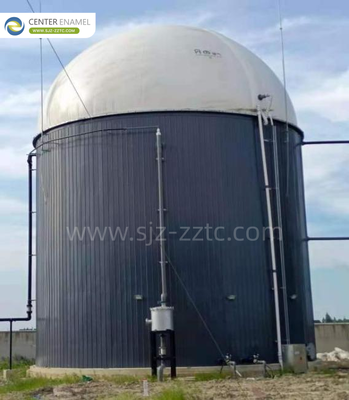
Um den stark korrosiven Bedingungen standzuhalten, die bei der Güllevergärung von Nutztieren typisch sind, erfordern Primärreaktionsbehälter überlegene Metallurgie- und Beschichtungstechnologien. Center Email stellt branchenführende GFS-Tanks (Glass-Fused-to-Steel) her, indem es speziell formulierte anorganische Glasfritte bei extremen Temperaturen zwischen 820 °C und 930 °C auf hochfeste Stahlplatten verschmilzt. Diese Doppelbeschichtungsstruktur kombiniert die strukturelle Festigkeit von Stahl mit der außergewöhnlichen chemischen Beständigkeit von Glas und eliminiert so Korrosionsrisiken. Um das erzeugte Gas effizient aufzufangen, bieten integrierte Doppelmembrandächer eine optimale Lösung. Ausgestattet mit einer inneren Gasspeichermembran und einer äußeren Wetterschutzmembran, die durch automatische Luftdruckkontrollen reguliert wird, maximiert dieser Aufbau die räumliche Effizienz und sorgt für vollständige Gasdichtheit.
Verschiedene Phasen einer anaeroben Vergärungsanlage erfordern spezielle Eindämmungsstrukturen und Abdeckungskonfigurationen, die auf spezifische Betriebsanforderungen zugeschnitten sind. Center Email stellt eine vielfältige Palette alternativer Lagertanks her, darunter verzinkte Stahltanks, die mit dauerhaften Zinkschutzschichten behandelt sind, Fusion Bonded Epoxy (FBE)-Tanks, die in Zusammenarbeit mit AkzoNobel für nahtlose chemische Barrieren entwickelt wurden, und Edelstahltanks (AISI 304/316), die für extreme chemische Beständigkeit gebaut sind. Als Ergänzung zu diesen Schiffen umfassen unsere umfassenden Dachoptionen geodätische Kuppeldächer aus Aluminium für eine lange Haltbarkeit, mit Stahl verschmolzene Glasdächer zur Geruchskontrolle unter Druck, Trogdeckdächer aus Aluminiumlegierung für nicht luftdichten Regenwasserschutz, Edelstahldächer für raue Industrieumgebungen und GFK-Dächer, die in Kuppel- oder Flachausführung für die Wasserspeicherung in der Landwirtschaft erhältlich sind.
Eine voll funktionsfähige landwirtschaftliche Biogasanlage erfordert eine synchronisierte Reihe von Zusatzgeräten zur Aufbereitung des Ausgangsmaterials, zur Gasreinigung und zur Verwaltung des Gärrests. Mechanische Stabsiebe entfernen zunächst große grobe Rückstände aus dem Rohzulauf. Homogenisierungstanks gleichen Durchflussschwankungen aus, bevor sie in das CSTR-System gelangen. Fest-Flüssigkeits-Separatoren trennen vergorene Gärreste mechanisch in faserigen organischen Dünger und flüssigen Gärrest für die landwirtschaftliche Anwendung oder zur Lagerung von Schwarzfilmteichen. Gasspeicher bieten sekundäre Gasspeicherkapazität. Entwässerungs- und Entschwefelungstanks entfernen Feuchtigkeit und korrosiven Schwefelwasserstoff aus dem Biogasstrom. Booster-Lüfter sorgen für einen stabilen Gasdruck, während Durchflussmesser die volumetrische Leistung überwachen. Schließlich wandeln Fackelsysteme, Kessel und hocheffiziente Biogasgeneratoren oder CNG-Systeme das gereinigte Gas in nützliche thermische und elektrische Energie um.
Center Email agiert als All-Inclusive-Lösungsanbieter aus einer Hand und rationalisiert den gesamten Lebenszyklus von industriellen und landwirtschaftlichen Biogasanlagen. Mit einer riesigen Produktionsbasis von 150.000 Quadratmetern und einer jährlichen Produktionskapazität von über 250.000 Blatt unterstützen wir Kunden in mehr als 100 Ländern weltweit. Unser Kerngeschäft umfasst vollständige EPC-Verträge, spezialisierte Prozesspaketentwicklung und direkte Ausrüstungslieferung. Durch die Überwachung jeder Projektphase, vom Konzeptentwurf und der Präzisionsfertigung bis hin zum Aufbau vor Ort, Tests und Bedienerschulung, minimieren wir das Projektrisiko, kontrollieren den Kapitalaufwand und garantieren eine zuverlässige Anlagenleistung, die internationalen Umweltstandards entspricht.
Die Umwandlung von tierischen Abwässern in saubere erneuerbare Energie bietet einen nachhaltigen Weg für die moderne Landwirtschaft. Durch die Integration robuster GFS-Eindämmungsbehälter, fortschrittlicher CSTR-Fermentationstechnologie und umfassender Gasnutzungsausrüstung können landwirtschaftliche Betriebe Verschmutzungsgefahren beseitigen und gleichzeitig eine langfristige Energieunabhängigkeit erreichen.
Welche spezifischen Vorteile bieten mechanische Vorrichtungen zum Aufbrechen von Granaten in landwirtschaftlichen CSTR-Reaktoren?
Geräte zum Aufbrechen von Schalen zerkleinern aktiv hartnäckige Oberflächenkrusten und schwimmende Trümmer, die sich aus Tierabfällen mit hohem Feststoffgehalt angesammelt haben, und sorgen so für eine kontinuierliche Gasfreisetzung und eine gleichmäßige biologische Aktivität.
Wie wirkt sich der Einbau automatisierter Durchflussmesser auf die allgemeine Betriebssicherheit der Biogasanlage aus?
Automatisierte Durchflussmesser ermöglichen die volumetrische Verfolgung des produzierten Gases in Echtzeit und ermöglichen es den Bedienern, Systemleistungstrends sofort zu überwachen und unerwartete Schwankungen oder Lecks frühzeitig zu erkennen.
Warum werden Lagertanks aus Edelstahl häufig für bestimmte chemische Konditionierungsphasen in Biogasanlagen ausgewählt?
Edelstahltanks bieten eine hervorragende Beständigkeit gegenüber aggressiven Chemikalien und speziellen Konditionierungsadditiven, die bei der Abwasseraufbereitung eingesetzt werden, und gewährleisten so eine langfristige strukturelle Integrität ohne Beeinträchtigung.